He could probably 3D print some.Michael wrote:Does VITAL has opposable thumbs?
If so, we're screwed.
It's great for VITAL but how are all the little word processors and spreadsheets supposed to make a living?

He could probably 3D print some.Michael wrote:Does VITAL has opposable thumbs?
If so, we're screwed.
Random Financial Advice Generator wrote:Arbitrage-free credit exposures: in the foreign currency marketplace, be sure to redistribute them.
Random Financial Advice Generator wrote:In off-balance-sheet market segments, be sure to redistribute sequential-pay conduits.
pioneer98 wrote:Random Financial Advice Generator
Random Financial Advice Generator wrote:Arbitrage-free credit exposures: in the foreign currency marketplace, be sure to redistribute them.Random Financial Advice Generator wrote:In off-balance-sheet market segments, be sure to redistribute sequential-pay conduits.
The smart trader nowadays will be sure not to cover lower-classed securities.
Uninsured commodities: in standardized markets, plan to hedge them.
As you are aware, Intrade the Prediction Market Limited ("Intrade") ceased offering trading services to customers via the website Intrade.com on March 10th, 2013.
It appears very unlikely now that Intrade will resume trading services in the way it had operated previously.
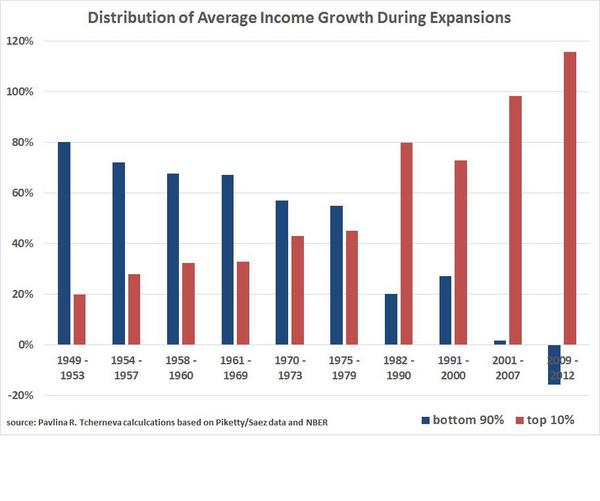
Even if you are sure — and be honest my Keynesian and monetarist friends, we are none of us sure — that your “soft money” policy will yield higher real production in aggregate than a hard money stagnation, you will be putting comfortable incumbents into jeopardy they otherwise need not face. Some of that higher return will be distributed to groups of people who are, under the present stability, hungry and eager to work, and there is no guarantee that the gain to the wealthy from excess aggregate return will be greater than the loss derived from a broader sharing of the pie. “Full employment” means ungrateful job receivers have the capacity to make demands that could blunt equity returns. And even if that doesn’t happen, even if the rich do get richer in aggregate, there will be winners and losers among them, each wealthy individual will face risks they otherwise need not have faced. Regression to the mean is a [expletive]. You have managed to put yourself in the 99.9th percentile, once. If you are forced to play again in anything close to a fair contest, the odds are stacked against your repeating the trick. It is always good advice in a casino to walk away with ones winnings rather than double down and play again. “The rich” as a political aggregate is smart enough to understand this.
.jpg)
Here's the not-so-secret truth about America's political system: the people who run it are almost all rich. In January, the Center for Responsive Politics reported that the median net worth of members of Congress has reached a record high of $1,008,767. Millionaires make up just 3 percent of the country, but on Capitol Hill, they're firmly in the majority (and in the Senate, they're a super-majority). And Congress isn't alone: millionaires have a 5-4 majority on the Supreme Court and a man in the White House, too.