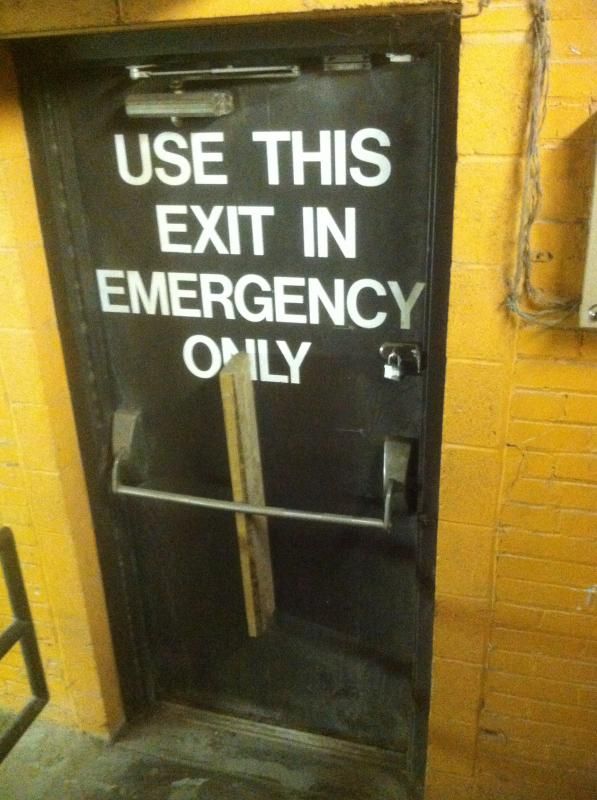
Our financial system is crumbling this week.

Chat about non-baseball topics. No political discussions!
Post Reply
Michael
GRB Founder
Posts: 35303
Joined: December 31 69, 6:00 pm
Location: Chicago, IL
Contact:

Re: Our financial system is crumbling this week.

Post by Michael »

Here's a general the order of operations for savings, I think:

1. Establish an emergency fund to your satisfaction (at least 2-3 mos of expenses?)
2. Contribute to your 401k up to any company match
3. Pay off any debts with interest rates ~5% or more above the 10-year Treasury note yield.
4. Max HSA (if applicable)
5. Max Traditional IRA or Roth (or backdoor Roth) based on income level
6. Max 401k (if 401k fees are lower than available in an IRA, or if you need the 401k deduction to be eligible for a tIRA, swap #5 and #6)
7. Fund mega backdoor Roth if applicable
8. Pay off any debts with interest rates ~3% or more above the 10-year Treasury note yield.
9. Invest in a taxable account with any extra.

Individuals will have different ordering based on their specific needs, but I think this is a reasonable starting point. An example of not using this ordering is if you need to access your money in a few years. If that's the case than you don't want to invest in a 401k.

I might also switch 8 and 9.

Here's where I found the ordering with additional details.


edit -
Arthur Dent wrote:
lukethedrifter wrote:I really haven't been able to conclude that before or after tax contributions are the absolute way to go.
For me, it makes more sense to do after tax contributions in a Roth IRA rather than a employer plan because, in the case their were some kind of emergency where I really needed to tap those funds, I can withdraw the principle (though not the interest) without penalty. In fact, for similar reasons, I only contribute enough to my employer plan to get the full match and instead make extra contributions to the Roth IRA. With a 401k, you have to get the plan's permission with a justification that's on their list to make an early withdrawal.

The combination of the two gives me a mix of both before and after tax dollars, which seems like a good hedge your bets plan.
I agree with this. The only caveat is a person needs the discipline of actually following through with investing the money in a Roth. A great thing about the 401k is the automatic deduction to the paycheck that nudges an individual to adjust their lifestyle accordingly.

Arthur Dent
Hall Of Famer
Posts: 12526
Joined: April 25 06, 6:43 pm
Location: Austin

Re: Our financial system is crumbling this week.

Post by Arthur Dent »

Michael wrote:Here's a general the order of operations for savings, I think:

1. Establish an emergency fund to your satisfaction (at least 2-3 mos of expenses?)
2. Contribute to your 401k up to any company match
3. Pay off any debts with interest rates ~5% or more above the 10-year Treasury note yield.
4. Max HSA (if applicable)
5. Max Traditional IRA or Roth (or backdoor Roth) based on income level
6. Max 401k (if 401k fees are lower than available in an IRA, or if you need the 401k deduction to be eligible for a tIRA, swap #5 and #6)
7. Fund mega backdoor Roth if applicable
8. Pay off any debts with interest rates ~3% or more above the 10-year Treasury note yield.
9. Invest in a taxable account with any extra.
Using an HSA as a backdoor retirement vehicle seems somewhat risky to me as the accounts are nominally for health expenses, and if you end up wanting to use the money for something else, you can get stuck with penalties. Right now, this is waived after 65, but I'm not sure I'd want to count on that always continuing to be the case over the several decades before I retire, especially if the accounts are widely used as a retirement tax dodge instead of for their nominal health savings functions.

Regarding traditional versus Roth IRA, only the Roth allows for penalty free early withdrawal of contributions, which tips the balance in my view, especially if you already do pre-tax with your employer, but maybe there's some other factors I haven't considered.

I also think there's a strong case for having taxable savings even without maxing out tax shelters. Whether for some kind of big expenses or just for the fact that life and plans change, it's good to have money you can access before when you were thinking you were going to retire even if you have to pay some taxes on the investment gains.

Dunno about that backdoor Roth thing either. Kind of seems like a scam, which you can't really do anyway unless your employer is enabling it.

Michael
GRB Founder
Posts: 35303
Joined: December 31 69, 6:00 pm
Location: Chicago, IL
Contact:

Re: Our financial system is crumbling this week.

Post by Michael »

Arthur Dent wrote: Using an HSA as a backdoor retirement vehicle seems somewhat risky to me as the accounts are nominally for health expenses, and if you end up wanting to use the money for something else, you can get stuck with penalties. Right now, this is waived after 65, but I'm not sure I'd want to count on that always continuing to be the case over the several decades before I retire, especially if the accounts are widely used as a retirement tax dodge instead of for their nominal health savings functions.
Very valid points. There's certainly gray areas here.

Arthur Dent wrote:
I also think there's a strong case for having taxable savings even without maxing out tax shelters. Whether for some kind of big expenses or just for the fact that life and plans change, it's good to have money you can access before when you were thinking you were going to retire even if you have to pay some taxes on the investment gains.
I kinda disagree with this but it can depend on an individuals situation. If you're worried you'll need the money in a reasonable time frame, than you basically need to park your money in under performing CD/cash accounts as opposed to higher performing assets. That said, I think that's what the emergency fund is for. Also, you can also withdraw on your 401k for hardship reasons if things get sticky.

Arthur Dent wrote:Dunno about that backdoor Roth thing either. Kind of seems like a scam, which you can't really do anyway unless your employer is enabling it.
It's a a silly loophole for higher income families, but not a scam. Consider it a small window in to the wonderful world of legal tax avoidance by people with means. :wink:

You can do it by yourself on Vanguard. It's not a huge secret or anything. The IRS has allowed it for years.

User avatar
lukethedrifter
darjeeling sipping elite
Posts: 37259
Joined: October 17 06, 11:19 am
Location: Huis Clos

Re: Our financial system is crumbling this week.

Post by lukethedrifter »

I still need some money to live on.


As I mentioned, my situation is different in that my retirement savings is in addition to my defined benefit pension, 75% of my last 3 years salary averaged. The scary part is if the City goes bankrupt. I'm really [expletive] then. Trying to get our Pension Board and my Union to push for some sort of legislation to guarantee at least a pct if the system fails due to the City failing.

Need to get my savings up a bit before I can increase my Roth contributions but that's next. Also, I'm able to borrow against my deferred comp, if necessary.

Arthur Dent
Hall Of Famer
Posts: 12526
Joined: April 25 06, 6:43 pm
Location: Austin

Re: Our financial system is crumbling this week.

Post by Arthur Dent »

Michael wrote:
Arthur Dent wrote:I also think there's a strong case for having taxable savings even without maxing out tax shelters. Whether for some kind of big expenses or just for the fact that life and plans change, it's good to have money you can access before when you were thinking you were going to retire even if you have to pay some taxes on the investment gains.
I kinda disagree with this but it can depend on an individuals situation. If you're worried you'll need the money in a reasonable time frame, than you basically need to park your money in under performing CD/cash accounts as opposed to higher performing assets. That said, I think that's what the emergency fund is for. Also, you can also withdraw on your 401k for hardship reasons if things get sticky.
You can do a hardship withdrawal, but having known people who have done this, it's not so easy in practice and subject to approval by your plan administrator in any case. With a IRA or Roth IRA you have the money immediately and don't need anyone's approval. I suppose the plus side is that an extremely common emergency is losing your job, which means you can you can rollover to an IRA, but if you need to continue working, don't assume you can get that money when you want it.

To me, the emergency fund is a zero risk account but one that only covers a few months expenses*. There are reasons you may want accessible savings beyond that. For example, what if you have extended unemployment or need/want to take a lower paying job for some time without slashing your expenses. If you want to anticipate this but don't especially think it will happen soon, taking a bit more risk for a higher return may be a reasonable choice.

*Though I've never had a good idea of how many months. Based on what I've seen with people dealing with layoffs, even 6 months may run out, which is already an amount most people are going to struggle hugely to accumulate.

Michael
GRB Founder
Posts: 35303
Joined: December 31 69, 6:00 pm
Location: Chicago, IL
Contact:

Re: Our financial system is crumbling this week.

Post by Michael »

I think the size of an emergency fund depends on many factors like your spouse, career mobility, kids and peace of mind. I've read mostly 3-6 mos of expenses for an emergency fund. I'm more on the aggressive side due to being a DINK.

Michael
GRB Founder
Posts: 35303
Joined: December 31 69, 6:00 pm
Location: Chicago, IL
Contact:

Re: Our financial system is crumbling this week.

Post by Michael »

Also I completely agree investing up to your 401k company match then maxing your Roth is a better approach than 401k only assuming the investor actually follows through with investing it. The order of investing I posted above supports your approach.

Arthur Dent
Hall Of Famer
Posts: 12526
Joined: April 25 06, 6:43 pm
Location: Austin

Re: Our financial system is crumbling this week.

Post by Arthur Dent »

Yeah, I think your list makes a lot of sense in general and basically endorse the framework. I'm curious where those interest rate thresholds on debt payoff come from. Seems like an additional factor on that would be whether it's debt you can not pay if needed.

I just hear people talk about maxing out all these tax shelters and it seems excessive to me. First of all, few can afford that, but also, do you really need that much money, but only when you're old? The relatively wealthy professionals who can play these games in the first place seem to often have excessive self-confidence. This can manifest in errors like gambling on individuals stocks (I'm always a bit shocked at how often I hear people who should be educated enough to know better talking about the bad risks they are taking) but also seems to lead to thinking minimizing taxes is the highest goal with little worry about the intermediate term, which they believe won't be a problem as their good position in the career game means they are winners who will surely continue to succeed.
Last edited by Arthur Dent on July 6 17, 4:59 pm, edited 1 time in total.

User avatar
IMADreamer
Has an anecdote about a townie he overheard.
Posts: 12866
Joined: December 6 10, 1:09 am
Location: Illinois

Re: Our financial system is crumbling this week.

Post by IMADreamer »

I think I should investigate this backdoor Roth idea, although this year my earned income will be crap.

User avatar
G. Keenan
Sucking on the Rally Nipple
Posts: 23706
Joined: April 16 06, 6:03 pm
Location: Chicago

Re: Our financial system is crumbling this week.

Post by G. Keenan »

Question for the GRB hive re index funds:

Is now a bad time to buy something like an S&P index fund? The market is so high. Is it better to wait for it to decline, then buy? I ask because I have a couple of stocks that I'm thinking about selling and using the cash to buy an index fund that I can start paying into on the regular and just sit on until retirement (God willing). The stocks are safe, pretty boring large companies. They're never gonna get too high or too low. They both pay quarterly dividends, but the positions aren't big so the dividends are not serious amounts of money. If I sell them I'll have to pay some capital gains, but I wonder if that's worth it to buy something with more long term growth potential. I'm thinking of selling them soon with the market high and parking the cash in something short term, waiting for Trump to crash the global economy in the next 1 - 4 years, and buy the market when it's low.

Is this dumb?

Post Reply