Re: Junior Seau
Posted: January 23 13, 3:45 pm
Junior Saeu's family is suing the NFL and Riddell helmets
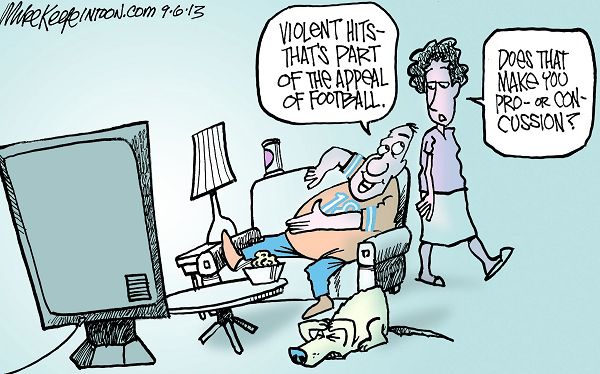
Los Angeles (CNN) -- Former linebacker Junior Seau's family sued the National Football League on Wednesday, claiming his suicide last May was the result of a brain disease caused by violent hits he endured playing the game, the lawsuit said.
Last year, Seau, 43, committed suicide in his bedroom in Oceanside, California, with a gunshot wound to the chest, prompting speculation about whether repeated hits to his helmet over his 20-year pro career could have been a contributing factor.
Earlier this month, Seau was determined to have chronic traumatic encephalopathy, a neurodegenerative brain disease that can follow multiple hits to the head, the National Institutes of Health said.
The lawsuit, filed in San Diego County Superior Court, accuses the NFL and helmet manufacturer Riddell Inc. of wrongful death, but doesn't specify a figure for compensatory and punitive damages. The suit also alleges fraud, negligence and concealment.
The NFL could not be immediately reached for comment.
Riddell Inc. has not yet seen the lawsuit and said it wasn't appropriate to comment on pending litigation, the firm said in a statement.
"We are confident in the integrity of our products and our ability to successfully defend our products against challenges," the company said.
The lawsuit was filed by Seau's children -- sons Tyler, Jake and Hunter and daughter Sydney, all of California -- and Gina Seau, who is the parent of Jake and Hunter, both of whom are minors. Junior Seau's estate also is a plaintiff.
"We were saddened to learn that Junior, a loving father and teammate, suffered from CTE," the family said in a statement.
"We know this lawsuit will not bring back Junior. But it will send a message that the NFL needs to care for its former players, acknowledge its decades of deception on the issue of head injuries and player safety, and make the game safer for future generations," the family said.
More than 1,500 former NFL players are suing the NFL, alleging the league hid the dangers of concussions from them.
Seau was one of a string of high-profile NFL players -- along with Dave Duerson, Shane Dronett and Shane Easterling -- who took their own lives and were later diagnosed with CTE.
Not everyone who is exposed to repeated head trauma would develop the disease, experts say.
CTE can result in Alzheimer's-like symptoms such as dementia, memory loss, aggression and depression, but it can be diagnosed only after death.
Seau's family donated his brain to the NIH for research, and this month it released a statement saying "abnormalities were found that are consistent with a form of (CTE)."
According to the NIH's pathology report, five researchers -- two NIH neuropathologists and three independent experts -- examined slides of Seau's brain and all confirmed that there were signs consistent with CTE. None of the researchers was aware of the identity of the brain when initially looking at it.
In a recent study, researchers found CTE in 34 of 35 deceased NFL players whose brains were donated by family members.
A brain with CTE is riddled with dense clumps of a protein called tau. Under a microscope, tau appears as brown tangles similar to dementia. However, the Boston study showed this progressive, tau protein array in football players much too young for a dementia diagnosis, which typically occurs in people in their 70s or 80s.